
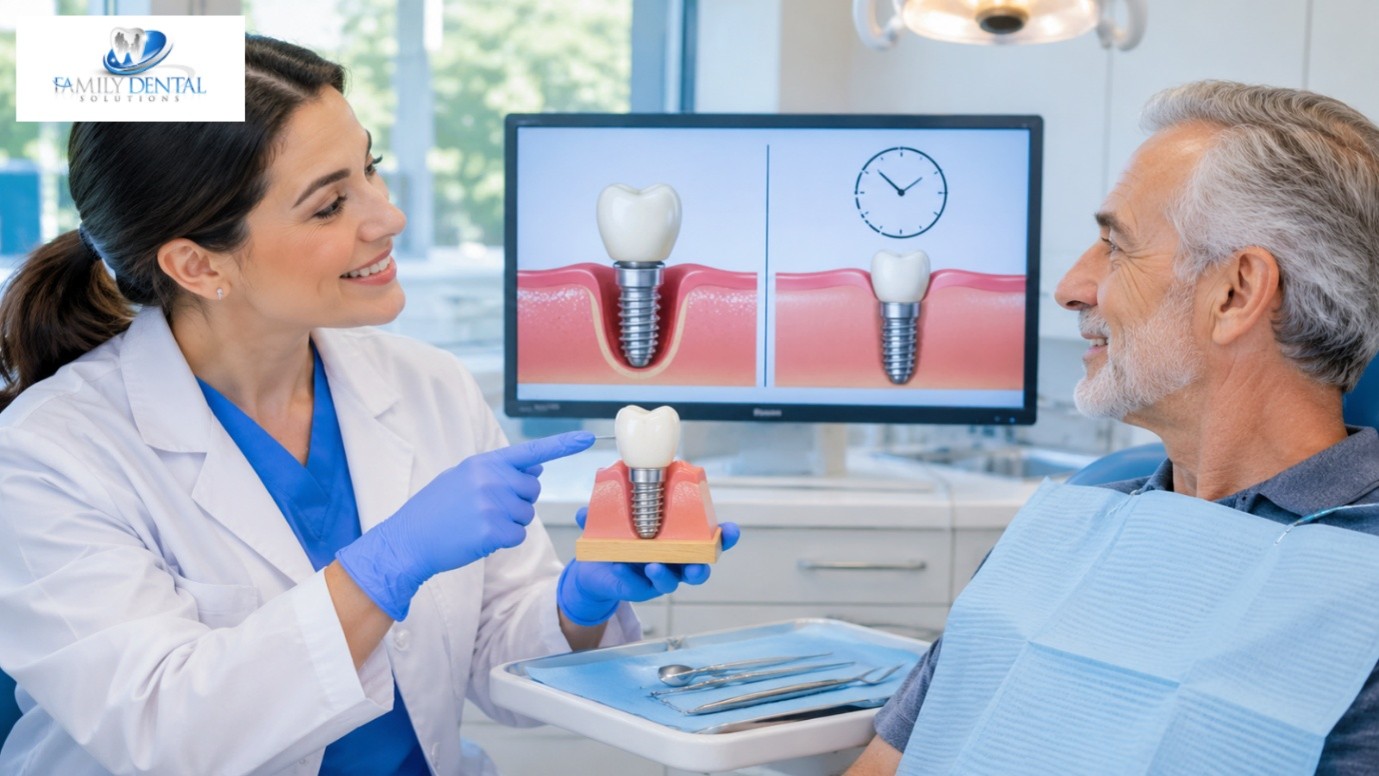
Immediate and delayed near cartersville implant dentist differ in when the implant is placed after a tooth is removed. With immediate placement, the dentist places the implant during the same visit as the tooth removal. With delayed placement, the dentist waits until the area has had time to heal. Both options can help replace missing teeth, but the right choice depends on your gums, jawbone, and overall oral health. A dental exam can help you understand which option may work best for you.
Understanding Immediate Dental Implants
Immediate dental implant placement means the dentist removes a damaged tooth and places the implant during the same appointment. This may reduce the number of separate visits needed for surgery. It can also help some patients move through parts of treatment sooner.
However, immediate placement is not right for everyone. The jawbone and gums must be in good enough condition to support the implant. The dentist will check the area before deciding whether this approach is safe and suitable.
Immediate dental implant placement may be an option when:
- The jawbone is strong enough: The bone must provide support to hold the implant in place.
- The gums are healthy: The tissue around the missing tooth should be in a suitable condition for healing.
- The implant can be held firmly: The dentist must be able to place the implant with enough stability.
- There are no major concerns with infection: The dentist will check for signs of infection that could affect treatment.
- Your oral health supports the procedure: Your dental and medical history will help the dentist decide whether immediate placement is suitable.
It is important to know that placing an implant on the same day does not always mean you will receive your final replacement tooth that day. Some patients may receive a temporary tooth, while others need to wait for the implant to heal before the final crown is attached.
Understanding Delayed Dental Implants
Delayed dental implant placement means the dentist removes the damaged tooth first and waits for the area to heal before placing the implant. The waiting time depends on your oral health and how much healing the area needs.
This approach may be a better choice when the gums or jawbone need more time to recover. It also gives the dentist a chance to treat certain problems before moving forward with implant surgery.
A delayed implant may be recommended when:
- The area needs time to heal after tooth removal.
- An infection needs to be treated before implant placement.
- The jawbone needs extra support through a bone graft.
- The gums need care before the next step.
- The dentist needs to check the area again before placing the implant.
Waiting longer does not mean that the treatment will be less successful. In some cases, allowing the area to heal first can help create better conditions for implant placement. The main goal is to choose a treatment plan that fits your dental needs.
Immediate vs. Delayed Dental Implants: Key Differences
Both options aim to replace a missing tooth and help restore normal chewing and appearance. The main difference is when the implant is placed and whether the area is ready for it.
| Factor | Immediate Implants | Delayed Implants |
| Timing | Placed during the same visit as tooth removal | Placed after the area has had time to heal |
| Number of surgical stages | Tooth removal and implant placement may happen in one visit | Tooth removal and implant placement happen at different times |
| Healing | The implant and extraction area heal during the same period | The extraction area heals before implant placement |
| Best suited for | Patients with suitable bone and gum conditions | Patients who need more healing or other treatment first |
| Treatment time | May reduce some waiting time | May take longer overall |
| Temporary tooth | May be possible, depending on implant stability | Depends on healing and the treatment plan |
What Affects the Timing of Dental Implants?
Several things can affect when you can receive a dental implant. These include the health of your gums, the strength of your jawbone, and the reason your tooth needs to be removed.
If you are considering treatment with an implant dentist near Cartersville, discuss your dental history, current problems, and treatment goals during your appointment.
Here are some important factors your dentist may check:
- Jawbone health: The jawbone needs to support the implant. If there is not enough bone, a bone graft may be needed before treatment.
- Gum health: Gum disease may need to be treated before implant placement to help support healthy healing.
- Infection: If the area has an infection, the dentist will decide whether it needs treatment and more healing time before placing the implant.
- General health: Certain health conditions and medicines can affect healing. Smoking may also make recovery more difficult.
- Tooth location: The position of the missing tooth can affect the treatment plan and the type of replacement tooth used.
Your dentist may take dental X-rays or other images to check the bone and plan the procedure. These checks help the dentist understand what your mouth needs before treatment begins.
What Happens During the Dental Implant Healing Process?
Getting a dental implant takes more than placing it in the jawbone. The implant needs time to join with the bone. This process helps hold the implant in place so it can support a replacement tooth.
For patients looking into dental implants near by Kennesaw GA, knowing what to expect can make it easier to plan appointments and recovery time.
The treatment process may include these steps:
- Dental examination: The dentist checks your teeth, gums, and jawbone and talks with you about your needs.
- Tooth removal: If the damaged tooth cannot be saved, the dentist may need to remove it.
- Implant placement: The implant is placed during the extraction visit or after the area has healed.
- Healing and follow-up visits: Your dentist checks the area as it heals and makes sure the implant is becoming stable.
- Placement of the replacement tooth: Once the implant is ready, a crown or another suitable replacement is attached.
Healing times are different for each patient. Some people may need several months before receiving their final replacement tooth. Following your dentist’s instructions and attending follow-up visits can help you care for the area during recovery.
Dental Implants vs. Bridges and Dentures
Dental implants, bridges, and partial dentures can all replace missing teeth. Implants are placed in the jawbone, bridges use nearby teeth for support, and partial dentures can be removed for cleaning.
A Dentist in Marietta, GA can help you compare these options based on your oral health, budget, comfort, and treatment needs. The right choice depends on your individual dental condition and goals.
Frequently Asked Questions
Q: Are immediate dental implants better than delayed implants?
Ans: Not always. Immediate implants may help reduce treatment time when the gums and jawbone are in good condition. Delayed implants may be a better choice when the area needs time to heal, or an infection needs treatment first.
Q: How long do I have to wait for an implant after a tooth is removed?
Ans: Some patients can receive an implant during the same visit as tooth removal. Others may need to wait several weeks or months. Your dentist will check your gums and jawbone to decide when the area is ready.
Q: Can I get a temporary tooth while my implant heals?
Ans: Yes, some patients can receive a temporary tooth while the implant heals. This depends on how firmly the implant is held in place, where the missing tooth is located, and your treatment plan. Your dentist will explain which options are suitable.
Q: Does getting a dental implant hurt?
Ans: The dentist uses local anesthesia to help prevent pain during implant placement. You may have some soreness, swelling, or tenderness afterward. Your dentist will explain how to care for the area and manage discomfort during recovery.
Q: How do I know if I am a good candidate for dental implants?
Ans: Your dentist will check your gums, jawbone, and overall oral health. Your medical history, medicines, and smoking habits may also affect your treatment plan. An examination and dental images can help determine whether implants are a suitable option.
Take the Next Step Toward Replacing Missing Teeth
Choosing between immediate and delayed dental implants starts with understanding your oral health and how much healing your mouth needs. At Family Dental Solutions, we help patients explore tooth replacement options and understand each step of treatment. Contact our team to schedule an appointment, discuss your concerns, and learn which approach may suit your needs. We are here to help you make informed choices and take the next step toward a healthier smile.