
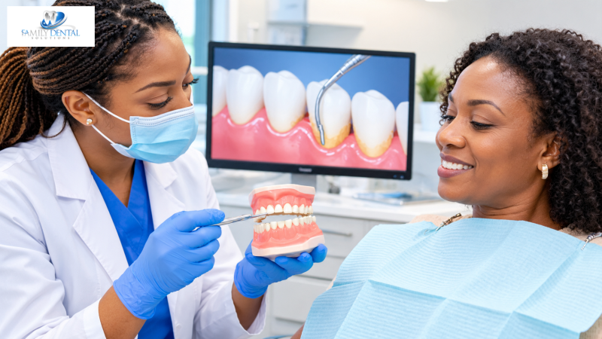
Periodontal disease treatment Marietta ga helps control gum infections, reduce swelling and bleeding, and protect the bone and tissues that support your teeth. Treatment can also help slow gum damage and lower the risk of tooth loss. For patients and families in Marietta, regular dental visits and proper home care are important steps toward healthier gums. Finding gum disease early allows your dentist to recommend suitable care before the condition becomes more serious.
Common Signs of Gum Disease
Gum disease often begins when plaque builds up around the teeth and along the gumline. Plaque contains bacteria that can irritate the gums. If it is not removed through daily brushing and professional cleaning, it can harden into tartar and lead to more serious gum problems.
The early stage, called gingivitis, can cause redness, swelling, and bleeding. With proper care, this stage can often be reversed. If gum disease progresses to periodontitis, it can damage the tissues and bone that hold your teeth in place.
Common warning signs include:
- Bleeding gums: Your gums bleed when you brush or floss.
- Redness and swelling: The gumline looks puffy, tender, or irritated.
- Persistent bad breath: Unpleasant breath continues even after brushing.
- Receding gums: Your teeth appear longer because the gums have pulled away.
- Loose teeth: Teeth may become loose when the supporting bone and tissues are damaged.
- Changes in your bite: Your teeth may feel different when you close your mouth or chew.
These signs do not always mean you have advanced gum disease. However, they should not be ignored. A dental examination can help identify the cause and determine whether professional treatment is needed.
Benefits of Periodontal Disease Treatment
Professional gum treatment helps remove harmful buildup, control infection, and protect the structures around your teeth. The type of treatment depends on the stage of gum disease, your symptoms, and the condition of your gums and jawbone.
Common treatment options include:
- Professional dental cleaning: Removes plaque and tartar from the teeth and gumline.
- Scaling and root planing: This deep cleaning removes plaque and tartar from below the gumline and smooths the tooth roots.
- Home care guidance: Your dentist can show you how to brush and clean between your teeth more effectively.
- Follow-up visits: Regular appointments help your dental team check healing and watch for signs that gum disease is returning.
The main goal of periodontal disease treatment in marietta ga is to control the disease and limit further damage. Treatment may not reverse all damage that has already occurred, but it can help protect the remaining gum tissue and bone. Following your dentist’s instructions is an important part of managing gum disease over time.
Protecting Natural Teeth through Early Care
Your gums and jawbone provide support for your teeth. When gum disease damages these structures, teeth may become loose or shift out of position. In advanced cases, tooth loss may occur.
Early treatment can help reduce inflammation and protect the support around your natural teeth. It can also make it easier to maintain your daily oral hygiene routine.
Patients can support their gum health by taking these steps:
- Schedule a dental visit when bleeding or swelling continues.
- Follow the recommended treatment plan.
- Keep up with regular dental cleanings.
- Report changes such as gum recession or loose teeth.
- Ask about follow-up care if gum disease has been treated before.
Gum disease does not always cause pain in its early stages. Waiting until discomfort develops may allow the condition to progress. Regular dental examinations can help identify problems before they become more difficult to manage.
Daily Habits for Healthier Gums
Professional treatment is only one part of gum care. Daily habits help control plaque and support the results of treatment. Even after your gums improve, plaque can build up again if you do not clean your teeth regularly.
Simple habits can make a difference:
- Brush twice a day with fluoride toothpaste and a soft-bristled toothbrush.
- Clean between your teeth daily using floss or another tool recommended by your dentist.
- Replace your toothbrush when the bristles become worn.
- Avoid tobacco, which can increase the risk of gum disease and affect healing.
- Attend dental checkups and professional cleanings as recommended.
- Follow your dentist’s instructions for caring for your gums at home.
Patients considering teeth whitening marietta ga should have their gum health checked before starting a whitening treatment. Whitening products are designed to improve tooth color, not treat gum disease. If your gums are inflamed or tender, your dentist can help you address those concerns before planning cosmetic treatment.
Keeping your gums healthy also supports other dental treatments. Healthy gum tissue provides a better foundation for maintaining your teeth and caring for your smile over the long term.
Complete Dental Care for Marietta Families
Gum health is an important part of overall dental care. Regular dental visits help identify gum problems early and support healthy teeth at every age.
Patients seeking family dental care in Marietta can benefit from:
- Preventive checkups: Help detect gum problems and plaque buildup early.
- Professional cleanings: Remove plaque and tartar that daily brushing may miss.
- Personalized dental guidance: Support children, adults, and older patients based on their oral health needs.
- Early attention to gum problems: Help address bleeding, swelling, or gum recession before the condition worsens.
When to Seek Dental Care
Sudden dental pain, significant swelling, or an injury involving your teeth or gums may require prompt attention. Patients looking for an emergency dentist near cartersville ga should explain their symptoms when contacting a dental office.
- Seek prompt dental care for severe tooth pain, swelling, or dental injuries.
- Contact your dentist if gum bleeding or swelling continues.
- Schedule an examination if your gums begin to recede or your teeth feel loose.
- Seek emergency medical care if severe swelling affects breathing or swallowing.
Regular dental visits and timely care can help you manage gum problems and maintain better oral health.
Frequently Asked Questions
Q: What is the main goal of periodontal disease treatment?
Ans: The main goal is to control gum infection, reduce inflammation, and protect the bone and tissues supporting your teeth. Treatment can help limit further damage and lower the risk of tooth loss.
Q: Can gum disease be treated without surgery?
Ans: Many cases can be managed with professional cleaning, scaling and root planing, and improved home care. More advanced gum disease may require additional treatment. Your dentist will recommend care based on the condition of your gums and supporting bone.
Q: What are the early signs of gum disease?
Ans: Early signs include bleeding, redness, swelling, and tenderness along the gumline. Some people may also notice persistent bad breath. Since gum disease can develop without pain, regular dental examinations are important.
Q: Can periodontal treatment help prevent tooth loss?
Ans: Treatment can help control gum disease and protect the structures supporting your teeth. The results depend on how much damage has occurred. Early diagnosis and proper care can help limit further damage and support the long-term health of your natural teeth.
Q: How can I keep gum disease from returning?
Ans: Brush twice daily, clean between your teeth every day, and attend regular dental visits. Follow your dentist’s instructions and ask whether you need more frequent professional cleanings based on your gum health.
Take the Next Step Toward Healthier Gums
Healthy gums help support your natural teeth and make daily oral care easier. Bleeding, swelling, or gum recession should not be ignored, even when there is no pain. At Family Dental Solutions, we help patients understand their gum health and explore treatment options suited to their needs. Contact our team to schedule an appointment, discuss your concerns, and learn how we can help you protect your gums and maintain a healthier smile.