
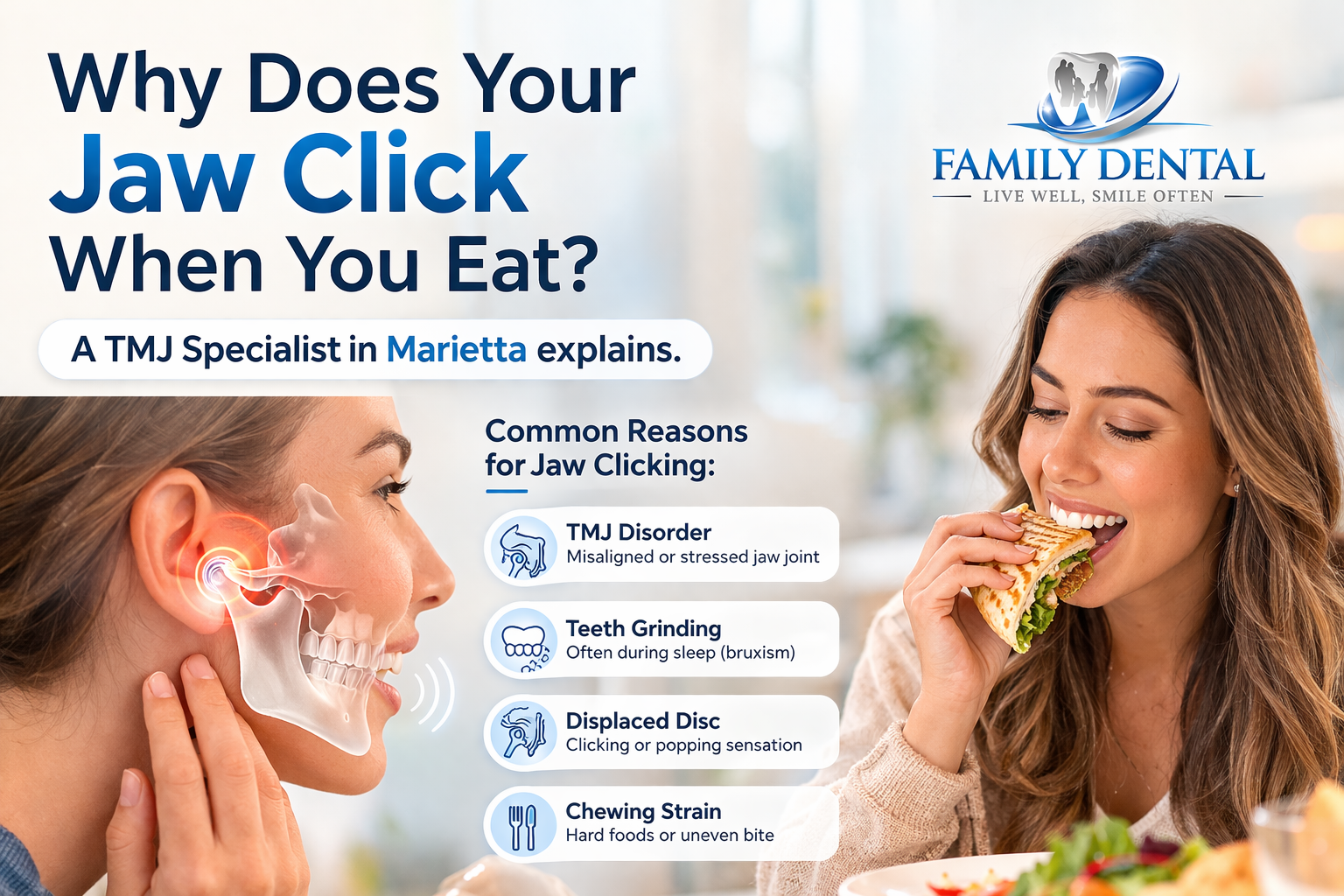
A clicking jaw during meals can feel strange. Crunching food should not sound like a tiny pop or snap near the ear. Jaw joints move every time someone chews, talks, or yawns. When the joint slips slightly out of place, the sound appears. A skilled TMJ specialist in Marietta often sees this problem in patients who grind their teeth, chew hard foods, or deal with stress. Early care helps protect the jaw joint and prevents pain from becoming a daily headache.
What Causes Jaw Clicking?
The jaw joint works like a sliding hinge. It connects the lower jaw to the skull. A small disc sits inside the joint and helps it move smoothly. When this disc shifts, a clicking or popping sound may occur.
Common causes include:
• Teeth grinding at night, which strains the joint
• Jaw injury or trauma from accidents or sports
• Bite misalignment, where teeth do not meet correctly
• Stress-related clenching during sleep or work
Over time, repeated strain can irritate the joint and surrounding muscles.
When Jaw Clicking Signals a Bigger Issue
Occasional clicking without pain might not cause concern. However, certain symptoms deserve attention from a TMJ specialist in Marietta.
Warning signs include:
• Jaw pain during chewing
• Difficulty opening the mouth wide
• Frequent headaches near the temples
• Ear pressure or ringing
These symptoms often point to temporomandibular joint disorder, also called TMJ disorder. Early care keeps the problem from getting worse.
How Dental Alignment Plays a Role
Jaw joints and teeth work together like gears in a machine. When teeth do not line up properly, the jaw joint takes extra pressure during chewing and speaking. Over time, this stress may lead to clicking sounds, soreness, or stiffness in the jaw.
Key factors include:
- Uneven tooth alignment places extra strain on the jaw joint
- Missing teeth can disturb bite balance and chewing patterns
- Dental implants in Marietta help replace lost teeth and restore bite stability
- Visiting an implant dentist in Cartersville can provide specialized solutions for long-term bite support
A balanced bite often reduces tension in the jaw and helps prevent TMJ discomfort.
Gum Health and TMJ Problems
Gum health plays a bigger role in jaw comfort than most people expect. Infections in the gums may weaken the bone supporting the teeth. As teeth shift due to bone loss, bite alignment changes, and pressure on the jaw joint increases.
Important points to remember:
• Gum infections can weaken the bone around teeth
• Shifting teeth may create bite imbalance and jaw strain
• Periodontal disease treatment in Marietta, GA, helps protect gum and bone health
• Routine dental checkups help detect gum disease before it affects the jaw
Healthy gums help keep teeth stable and support proper jaw movement.
Affordable Dental Care Makes Treatment Easier
Jaw issues sometimes appear alongside other dental concerns. Cavities, gum infections, or missing teeth may contribute to bite imbalance. Access to an affordable dentist in Marietta, GA, helps patients maintain regular care without financial stress. Preventive checkups keep teeth aligned and healthy. Early treatment also reduces the chance of complex TMJ problems later.
Simple habits can also protect the jaw:
- Avoid chewing very hard foods
- Reduce stress-related clenching
- Use mouthguards for night grinding
- Maintain routine dental visits
Small steps make a big difference.
FAQs
1. Is jaw clicking always a TMJ disorder?
Ans: No. Jaw clicking sometimes occurs without pain due to minor joint movement. However, persistent sounds with pain or stiffness may signal TMJ disorder. A dental exam helps determine whether treatment or monitoring is necessary.
2. Can missing teeth cause jaw clicking?
Ans: Yes. Missing teeth change bite alignment and place extra pressure on jaw joints. Restorative treatments such as dental implants in Marietta may restore proper bite balance and reduce strain on the temporomandibular joint.
3. Does stress affect jaw joints?
Ans: Stress often leads to clenching or grinding teeth during sleep. Constant pressure strains jaw muscles and joints. This habit may trigger clicking sounds, jaw fatigue, and even headaches.
4. When should someone see a TMJ specialist?
Ans: Professional care becomes important when jaw clicking includes pain, swelling, limited mouth opening, or frequent headaches. Early evaluation from a TMJ specialist helps prevent worsening joint damage.
5. Can gum disease affect the jaw joint?
Ans: Yes. Advanced gum infections weaken bone and may shift teeth. This shift can disturb bite alignment and place pressure on the jaw joint. Proper periodontal disease treatment in Marietta, GA, helps maintain healthy gums and jaw stability.
Ready to Silence That Jaw Click?
Jaw clicking should not ruin meals or daily comfort. The team at Family Dental Solutions provides advanced care for jaw disorders, gum health, and restorative dentistry. Whether the issue involves TMJ discomfort, missing teeth, or bite imbalance, professional help can make a big difference. Schedule a consultation today and let experienced dental professionals evaluate the problem. A healthier bite and quieter jaw could be closer than expected.